
Software products move fast. Features change, updates roll out, and users expect things to work without issues. That’s where automation quietly becomes important. Many beginners hear about Selenium but don’t fully understand why companies rely on it so much. When people start learning test automation, they often realize it’s not just about tools, it’s about understanding real project flow. Some learners exploring Selenium Training in Salem notice early on that Selenium aligns closely with how real software teams work, not just how tests are written.
Automating repetitive testing work
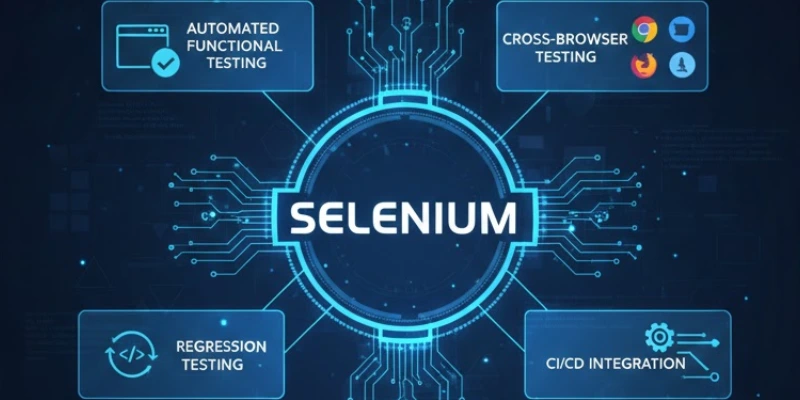
In most projects, the same features are tested repeatedly after every update. Login pages, forms, dashboards, and reports rarely change completely, but they must always work. Selenium is used to automate these repeated checks. Instead of humans clicking the same buttons daily, scripts handle it. This saves time and reduces human error. Teams can focus on new features rather than repeating old test cases, making development faster and smoother.
Supporting fast release cycles
Modern software teams release updates frequently. Sometimes weekly, sometimes daily. Manual testing alone cannot keep up with this speed. Selenium allows teams to run test scripts quickly during every release cycle. Tests can run at night, during builds, or before deployment. This helps catch bugs early and keeps releases stable. For beginners, understanding this shows how automation fits into real development workflows, not just testing theory.
Improving test coverage
Manual testing has limits. A tester cannot check every possible scenario on every browser and device. Selenium helps expand test coverage. It can automatically test multiple flows, user paths, and edge cases. This improves product reliability. Companies use Selenium to ensure users don’t encounter broken features after updates. For learners, this shows how automation improves quality, not just speed.
Building practical testing skills
Selenium is not just a tool; it builds thinking skills. You learn how applications behave, how elements load, how errors appear, and how systems respond to actions. This builds strong testing logic. Many people who combine Selenium with structured learning paths, such as Software Testing Courses in Erode, start to understand real testing roles, not just automation scripts. It teaches how to think like a tester, not just how to write code.
Connecting developers and testers
In many teams, Selenium creates a bridge between developers and testers. Automation scripts often use programming languages like Java or Python, which helps testers understand developer logic. This improves communication between teams. When testers understand code flow and developers understand testing needs, product quality improves. Selenium helps make testing part of development, not a separate step done at the end.
Career relevance in real projects
Selenium is widely used in real companies, not just training environments. Many job roles expect basic automation knowledge. Even manual testers benefit from understanding Selenium, as projects are increasingly moving toward automation. In growing tech markets, learners pursuing Selenium Training in Erode often find better job alignment when they understand the basics of automation. It adds value to profiles and opens more role options in testing teams.
Supporting scalable testing systems
As software grows, testing needs grow too. Selenium supports large test frameworks that scale with applications. Companies use it to build test systems that run across teams and projects. This makes long-term maintenance easier. Beginners who learn Selenium understand how testing systems evolve, not just how individual tests work. This mindset matters when working in large organizations with complex software products.
Selenium is used because it aligns with real software development life cycles. It saves time, improves quality, supports fast releases, and builds strong testing systems. For beginners, learning Selenium is not just about tools; it’s about understanding how modern software is built, tested, and maintained. When automation becomes part of thinking, not just learning, careers grow naturally. This mindset prepares learners for long-term roles in testing and quality assurance, especially for those building structured skills alongside paths such as Software Testing Course in Trichy to ensure future career stability.
Also Check: Advantages of Selenium Usage in Automated Testing







Recent Comments