
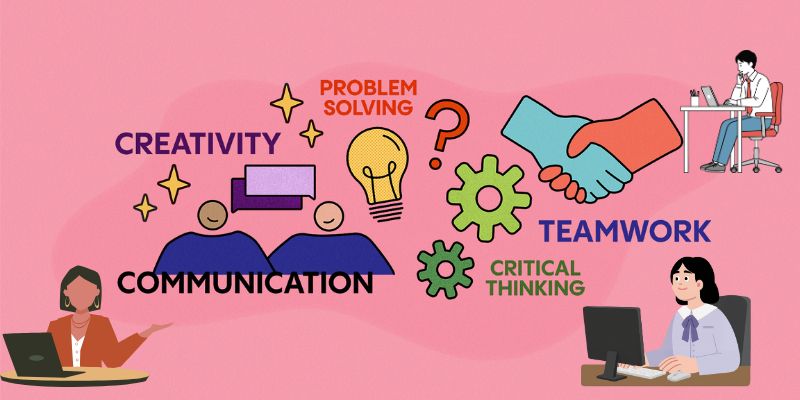
In today’s fast-paced, competitive environment, technical proficiency is no longer enough to guarantee success. Employers and organizations are increasingly valuing soft skills and personal traits that promote communication, teamwork, and flexibility in any situation. Whether you are a student, job seeker, or working professional, developing your soft skills can significantly enhance your professional growth and interpersonal relationships. FITA Academy offers specialized soft skills training programs that help individuals enhance communication, interpersonal abilities, confidence, and professional etiquette. This tutorial will help you develop essential skills for personal and career growth.
These abilities influence how you interact with others, deal with difficulties, and portray yourself. Fortunately, soft skills are malleable qualities that can be strengthened and developed with the correct strategy and persistent work. You will discover useful, doable techniques in this blog to enhance your soft skills and create a solid basis for long-term success.
Understanding Soft Skills and Their Importance
Soft skills are a mix of behavioral, communicative, and interpersonal skills that affect how you engage with other people. Soft skills are transferable to various industries and roles, in contrast to technical or hard skills, which are job-specific. Communication, cooperation, flexibility, problem-solving, and emotional intelligence are among them. These abilities are crucial because they affect how well you cooperate with coworkers, deal with obstacles at work, and establish professional connections.
For instance, someone with great technical expertise but bad communication skills can find it difficult to articulate ideas clearly. Conversely, a person with good soft skills can manage teams, settle disputes, and make a valuable contribution to any firm. The first step to developing soft skills is realizing their significance, which enables you to see how they affect both professional and personal success.
Key Soft Skills You Should Focus On
You must determine which soft skills are most crucial for success in order to make effective improvements. Since communication entails both active listening and clear concept expression, it is at the top of the list. Since most workplaces demand cooperation to accomplish goals, teamwork is equally crucial. Adaptability enables you to stress-free adapt to novel circumstances, technological advancements, and obstacles. Soft Skills Training in Chennai provides practical programs that help individuals develop communication skills, interpersonal abilities, confidence, and professional etiquette.
You can assess circumstances and come up with workable answers by using problem-solving techniques. Understanding your own emotions as well as those of others is made possible by emotional intelligence, which enhances relationships and decision-making. Leadership and time management abilities are also essential for productivity and professional advancement. You may develop a well-rounded skill set that increases your self-assurance, productivity, and value in any setting by concentrating on these fundamental areas.
Improving Communication Skills in Daily Life
Strong soft skills are built on effective communication. Start by adopting simplicity and clarity in your talks to make it better. Don’t use complicated phrases when you can communicate your point more effectively with simpler ones. Keep an eye on your tone, body language, and eye contact—all of which are important non-verbal indicators in communication.
Active listening is another crucial component; pay attention to what the other person is saying rather than planning your response. To demonstrate interest, pose queries and offer comments. Reading, writing, and taking part in conversations or presentations can all help you become a better communicator. Speaking in meetings or participating in group discussions, for instance, can increase your confidence and improve the way you express your ideas. Your communication skills will progressively improve with regular practice in real-world scenarios.
Building Confidence, Active Listening, and Empathy
Taking initiative and presenting your views require confidence. Establishing modest, attainable goals and acknowledging your accomplishments are the first steps towards developing confidence. Before you talk or give a presentation, make sure you are well-prepared because this will help you feel less nervous. Maintaining a growth mentality and engaging in positive self-talk are also essential for increasing confidence. Active listening is a skill that calls for complete focus and sincere curiosity in other people’s viewpoints, in addition to confidence. Soft Skills Training Institute in Chennai focuses on practical, activity-based preparation to help learners build strong skills in communication, interpersonal relations, teamwork, and professional development.
To be respectful, don’t interrupt and give intelligent answers. Another important soft talent is empathy, which entails sharing and comprehending the emotions of others. By placing yourself in another person’s shoes and taking into account their perspective before responding, you can cultivate empathy. When combined, self-assurance, attentive listening, and empathy strengthen bonds and enhance your capacity for successful communication in both personal and professional contexts.
Enhancing Teamwork and Collaboration Skills
A crucial soft talent that impacts how successfully you collaborate with others to accomplish shared objectives is teamwork. Focus on being helpful, courteous, and receptive to new ideas in order to improve this ability. Recognize that each team member has special talents, and appreciating these distinctions produces greater results.
Effective teamwork requires both active participation and clear communication. Assume accountability for your work and assist your colleagues when necessary. It’s also critical to learn how to provide and accept constructive criticism since it enhances performance and fosters trust. In a group project, for instance, candid idea sharing and attentive listening might result in creative solutions. You may favorably impact group endeavors and establish yourself as a dependable and encouraging team member by honing your teamwork abilities.
Developing Leadership and Conflict Resolution Skills
Anyone may learn to be a leader; it is not just a skill for managers. It entails exercising initiative, mentoring others, and making wise choices. This is soft skill mean you should know. Being proactive and accepting accountability for your actions is the first step towards developing your leadership abilities. Lead by example with your actions and work ethic, and inspire and motivate others. Another crucial component of leadership is conflict resolution.
Any firm will undoubtedly have conflicts, but skilled leaders know how to handle them. Concentrate on finding a positive solution rather than placing blame. You can foster a healthy work atmosphere and motivate people to provide their best effort by honing your leadership and dispute resolution abilities.
Improving Time Management and Adaptability
Effective time management is crucial for increasing output and lowering stress levels. Prioritize tasks according to their priority and due dates, then start by establishing clear goals. To prevent feeling overburdened, divide more complex jobs into smaller, more doable segments. You may maintain organization and attention by using tools like digital planners or to-do lists. By establishing reasonable deadlines and keeping yourself responsible, you can prevent procrastinating.
On the other hand, flexibility and receptivity to change are essential elements of adaptation. In today’s fast-paced world, the ability to adjust to new situations, barriers, and technologies is crucial. Instead of viewing change as a setback, embrace it as an opportunity to grow and learn. Developing new skills or acclimating to a new work environment, for example, might increase your resilience and confidence. Time management and flexibility work together to boost productivity and help you overcome challenges.
Practicing Soft Skills Through Real-Life Activities
It takes regular practice in practical settings to improve soft skills. You can begin by taking part in social interaction-challenging activities like volunteering, team projects, or group debates. Attending training sessions or workshops can also offer insightful advice and criticism. Role-playing games are especially helpful for honing problem-solving, communication, and conflict-resolution techniques.
For instance, you can practice your answers and decision-making skills by simulating job situations. YBy getting feedback from peers, mentors, or superiors, you may monitor your progress and identify areas for improvement. You can also learn from your experiences and make the required changes by thinking back on your regular encounters. You can progressively increase your confidence and efficacy by actively practicing soft skills in various contexts.
Tracking Progress and Continuous Improvement
Soft skill development is a continuous process that calls for constant assessment and work. Establish specific objectives for the abilities you wish to acquire and devise a strategy to reach them. Monitor your progress by reflecting on your interactions and identifying areas where you have improved or need further development. You may keep track of your experiences and draw lessons from them by keeping a notebook. Seek feedback from others to gain different perspectives on your performance.
Ongoing education is also crucial; read books, go to seminars, and keep up with the latest techniques for personal growth. Keep in mind that progress requires time, so be persistent and patient. You can build solid soft skills that will help you succeed in the long run by monitoring your progress and making a commitment to ongoing improvement.
What is next?
Your personal and professional lives can be completely transformed by soft skills. They make it possible for you to establish deep connections, speak clearly, and confidently adjust to shifting circumstances. You may build a powerful skill set that makes you stand out by realizing their significance and concentrating on important areas like communication, teamwork, leadership, and time management.
It takes effort, self-awareness, and a desire to learn to improve soft skills. You may improve your skills and accomplish your objectives with persistent work and the appropriate tactics. Start now and make incremental progress toward becoming a more self-assured, flexible, and productive person.






Recent Comments