
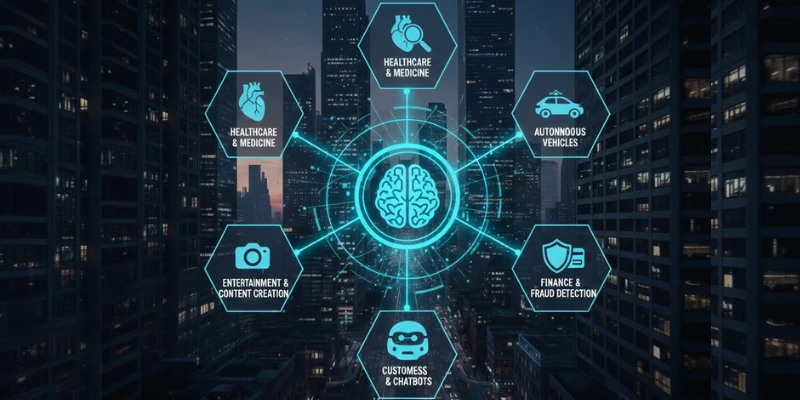
People usually get curious about AI when they see it solving problems that once needed full teams customer support bots, fraud detection, recommendations, even medical support systems. It stops feeling like a buzzword and becomes a real career skill. Many learners explore this field because they want work that connects technology with real impact. For those starting Artificial Intelligence Course in Trichy, the first big takeaway is simple: AI isn’t science fiction; it’s practical problem-solving used in everyday systems.
AI in daily digital experiences
AI already shapes how people use apps and platforms. Recommendation systems on shopping sites, video platforms, and music apps learn user behavior and automatically adjust content. Search engines rank results using learning models. Email platforms filter spam using pattern recognition. These systems run quietly in the background, saving time and improving accuracy. For beginners, this shows that AI is not about robots it’s about improving normal digital experiences through smarter decision-making.
AI in healthcare and diagnostics
In healthcare, AI supports doctors rather than replacing them. Systems analyze scans, reports, and patient data to highlight possible risks or patterns. Hospitals use AI to manage appointments, predict patient flow, and track medical records more efficiently. This reduces human workload and errors. Real-world healthcare AI focuses on support, speed, and accuracy, not automation alone. For learners, this area shows how AI blends technology with responsibility and trust.
AI in business operations
Companies use AI to manage inventory, predict demand, and analyze customer behavior. Chatbots handle basic customer queries, while data models help businesses plan sales and marketing strategies. Finance teams use AI for fraud detection and transaction analysis. These systems don’t replace teams; they support faster decisions and reduce repetitive work. This is where AI becomes a business tool, not a research project.
Skill-building and learning systems
AI is also changing how people learn. Smart platforms track progress, adjust difficulty levels, and personalize content based on performance. Learning becomes adaptive instead of fixed. People building technical skills often connect this with paths Generative AI Course in Trichy, where understanding how models learn and adapt becomes a core part of future-ready learning, not just coding knowledge.
AI in security and risk control
AI helps detect unusual behavior in systems, networks, and financial platforms. It flags threats, suspicious logins, and abnormal patterns faster than manual monitoring. This protects digital systems without constant human checking. Security teams use AI as a support layer that improves response speed and accuracy. This shows learners how AI connects with responsibility, not just automation.
Jobs and industry demand
AI skills are becoming part of many roles, not just AI-specific jobs. Developers, analysts, testers, and IT professionals now work alongside AI tools. Companies look for people who understand how to use AI systems, not just build them. Growing interest in regions Artificial Intelligence Course in Erode shows how demand is spreading beyond metro cities into wider job markets and industries.
AI in creative and content work
AI now supports design, writing, video editing, and media production. It helps with drafts, layouts, ideas, and automation of repetitive creative tasks. Humans still control quality and direction, but AI speeds up workflows. This balance between human thinking and machine support is shaping new career roles across digital industries.
AI in real-world applications is about support, speed, and smarter systems, not replacing people. It improves decisions, reduces manual effort, and strengthens digital workflows. People who grow in this field don’t just learn tools; they learn how systems think and respond. Those building their future through the Generative AI Course in Erode prepare for careers where working with intelligent systems becomes the norm, not the exception.
Also Check: Overview of Artificial Intelligence





Recent Comments