
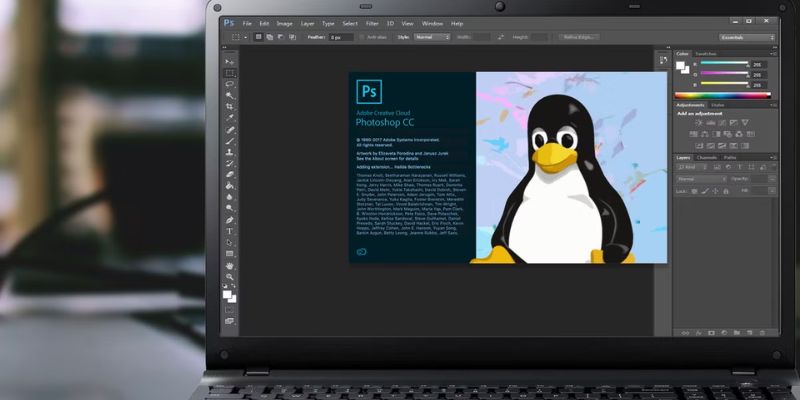
Linux has changed over the past few years from being an operating system designed primarily for developers to a potent tool for creative professionals. Linux is becoming more and more popular among designers, photographers, and digital artists because to its robust performance on both new and old technology, reliability, and customization choices. The open-source ecosystem, which provides a wealth of tools for digital art, design, and image processing, is highly valued by many creatives.
Despite not being officially accessible for Linux, Photoshop can nonetheless function properly via compatibility layers like Wine. Designers can continue to utilize Photoshop for professional projects while taking advantage of Linux’s versatility with the correct setup. Everything you need to know to operate Photoshop on a Linux desktop with confidence is covered in this book, from compatibility and installation to workflow optimization. FITA Academy offers specialized Adobe Photoshop training programs that help individuals and teams develop strong photo editing, graphic design, image retouching, and creative composition skills, enabling them to create professional-quality visuals for digital media, marketing, and design projects.
Understanding the Compatibility of Adobe Photoshop with Linux Systems
Technology cannot be installed directly like it can on Windows or macOS since Adobe does not officially support Linux. Rather, Linux users depend on compatibility layers that enable Windows programs to function on Linux systems. Wine, which converts Windows system calls into Linux-compatible instructions, is the most popular remedy. Many Photoshop versions can function well with this method without requiring a whole Windows environment. Because they require fewer system dependencies, some older versions of Photoshop frequently run better.
The Linux community has created dependable ways to run Photoshop with remarkable reliability in spite of the lack of official support. Users should be aware that system hardware, Photoshop version, and Linux distribution can all affect performance. Thankfully, contemporary compatibility tools keep getting better, making it simpler than ever for designers to incorporate Photoshop into their Linux workflows.
Choosing the Right Linux Distribution and System Requirements
Crucial to choose a Linux distribution that works well with graphics programs and wine before installing Photoshop. Because they offer reliable package management systems and robust community support, popular distributions like Ubuntu, Linux Mint, and Fedora are frequently suggested. It function better on a machine with a dedicated graphics card, a multi-core processor, and at least 8 GB of RAM. Photoshop Classes in Chennai offer hands-on programs that develop strong photo editing, graphic design, image retouching, and creative design skills, preparing learners to produce professional-quality visuals and excel in real-world creative and digital media projects.
Because creative tasks sometimes entail huge image files and complex documents, storage capacity is particularly crucial. Rendering performance can be greatly enhanced and display problems can be minimized by installing updated graphics drivers. Should make sure that their system has the necessary libraries that Wine needs in order to run Windows programs. Designers can build a solid basis for successfully using Photoshop in a Linux environment by selecting a well-supported distribution and adhering to the suggested system requirements.
Step-by-Step Guide to Installing Photoshop Using Wine or PlayOnLinux
Compared to standard installs, installing Photoshop on Linux requires a few more steps, but the procedure is doable with the correct tools. First, use the package manager on your Linux distribution to install Wine. Set up Wine to mimic a Windows environment after installation. Next, use your Adobe account or installation media to download the Photoshop installer. Use Wine to launch the installation, then adhere to the on-screen directions just like you would on a Windows computer.
Some users use PlayOnLinux because it offers a graphical user interface that makes managing applications and configuring Wine easier. For several Photoshop versions, PlayOnLinux comes with pre-written scripts that aid in automating the installation procedure. Photoshop can be used straight from your Linux application menu after installation is finished. To make sure everything functions properly, it is advised to test basic features like opening files, creating layers, and exporting photos. Photoshop can function dependably for routine design jobs with the right setup.
Optimizing Performance and Fixing Common Photoshop Issues
Performance concerns can occasionally arise when using Photoshop through Wine, although most issues can be resolved with minor tweaks. Make sure your graphics drivers are up to date first, since out-of-date drivers frequently result in delayed rendering or display issues. When working with large PSD files, speed can also be enhanced by giving Wine extra system memory. Reinstalling necessary fonts or libraries could fix Photoshop crashes that occur during startup. The Photoshop Training Institute in Chennai focuses on practical, project-oriented preparation to help learners develop strong photo editing, graphic design, image retouching, and creative design skills needed to produce professional-quality visual content.
In order to increase compatibility with specific Photoshop releases, some users also modify Wine settings to simulate various Windows versions. Turning off unused background apps can improve Photoshop’s performance and save up system resources. Additionally, load and save times are much enhanced when project files are stored on a fast SSD rather than a conventional hard drive. Even without native Linux support, designers can obtain a remarkably seamless Photoshop experience by implementing these enhancements.
Essential Photoshop Tools and Features for Linux Designers
As users can benefit from the same potent tools used by designers all around the world once Photoshop is operating properly. Flexible and non-destructive editing is made possible by features like layers, masks, adjustment layers, and blending modes. Digital artists and illustrators love Photoshop because of its brush tool and sophisticated brush settings. To perfect their shots, photographers use tools like the healing brush, clone stamp, and color balance tweaks. Smart objects are crucial for complicated projects because they let designers change elements without permanently changing the original information.
Isolating items within photos is made easier by Photoshop’s robust selection tools, such as the lasso and rapid selection tool. These are some features of photoshop. Majority of these tools perform well and preserve the same workflow that Windows or macOS users are accustomed to, even while operating through Wine. Gaining proficiency with these capabilities can greatly increase Linux’s creative potential and productivity.
Integrating Photoshop with Open-Source Creative Tools
The availability of numerous open-source creative programs that can enhance Photoshop is one benefit of using Linux. To create a flexible creative environment, designers frequently mix Photoshop with programs like GIMP, Inkscape, or Krita. For sophisticated compositing and texturing work, for instance, vector images can be produced with Inkscape and then imported into Photoshop. In a similar vein, digital artists might start with sketches in Krita and then use sophisticated layer effects in Photoshop to refine them.
Additionally, open-source software offer practical features like file conversion and batch picture processing. With this hybrid method, designers may embrace the flexibility of Linux software while still taking advantage of Photoshop’s professional features. Users can create robust processes that compete with conventional design settings on other operating systems by combining a variety of creative tools.
How Photoshop Is Used Across Different Industries
Widely utilized in many different industries, and Linux users can benefit from its adaptability for a range of professional activities. Used by graphic designers to produce branding assets, social media visuals, and posters. For sophisticated retouching, color grading, and image enhancement, photographers depend on it. Digital marketers to create eye-catching campaign images, website banners, and ads.
Photoshop aids web designers in producing visual layouts and interface mockups prior to the start of development. You can also used by digital artists and illustrators for digital painting, character creation, and concept art. Software offers the tools required for producing high-quality visuals, even on Linux platforms. It is a vital tool for professionals in creative sectors due to its wide range of applications.
Improving Workflow, Shortcuts, and Project Management
For designers working on intricate creative projects, effective workflow management is crucial. Numerous keyboard shortcuts in Photoshop greatly accelerate editing operations. During the design process, for instance. Shortcuts for tool switching, layer duplication, and image zooming can save a significant amount of time. On Linux systems, keeping data organized into project folders with clear labels also aids in maintaining an organized workflow.
To maintain editing flexibility when exporting final versions in JPEG or PNG formats, designers should routinely save layered PSD files. Projects can be shielded against unintentional data loss by using version control systems or cloud storage. Additionally, Linux users can use batch processing tools or scripts to automate repetitive activities. Designers may use Photoshop on a Linux platform with maximum efficiency by creating effective workflows and learning keyboard shortcuts.
Final Report
Allows users to create an effective design workflow. Tool for creating excellent images, regardless of your profession photographer, graphic designer, digital artist, or marketer. Users may fully utilize Photoshop’s creative potential while taking advantage of the flexibility. And control that the Linux ecosystem provides with the correct setup and workflow techniques.
Linux allows users to create an effective design workflow. This sofware is still a useful tool for creating excellent images. Regardless of your profession photographer, graphic designer, digital artist, or marketer. Linux users may fully utilize Photoshop’s creative potential while taking advantage of the flexibility and control that the Linux ecosystem provides with the correct setup and workflow techniques.





Recent Comments